Tag: Francesco Schettino

  • Francesco Schettino, Captain of Costa Concordia, Found Guilty of Manslaughter

    Francesco Schettino, Captain of Costa Concordia, Found Guilty of Manslaughter

    A little over three years ago, the Costa Concordia struck rocks off the Italian island of Giglio, initiating a massive shipwreck that killed 32 people and led to the largest salvation of its kind in maritime history. The captain of the Costa Concordia, Francesco Schettino, was found guilty of causing this disaster by an Italian court on Wednesday. He was also found guilty of 32 counts of manslaughter and of abandoning ship. He was sentenced to 16 years: 10 years for the manslaughter charges, five years for causing the wreck, and one year for abandoning the sinking vessel.

    That Schettino is in some sense responsible for the wreck has never really been in dispute. As the captain, he was at the helm of the ship when it crashed, and the wreck was only made possible by Schettino’s decision to take the vessel off course so that it could sail closer to Giglio’s shoreline. The trial therefore hinged on the precise extent to which Schettino was responsible for the shipwreck – was he a “reckless idiot” who sailed the ship too close to shore in an act of misguided bravado, as the prosecutors argued, or was the wreck the fault of multiple people who failed to maneuver the ship in accordance with the captain’s wishes, as the defense had it?

    There were also a number of questions related to the degree of blame that could be assigned to Schettino for the passengers’ deaths. Even if he was solely responsible for the shipwreck, it nevertheless remains true that no one died on impact. Thus, the 32 deaths were most directly the result of a failed evacuation, and it is not clear how much responsibility a single person can bear, even if that person is the ship’s captain, for the evacuation of a ship carrying 4,252 people. However, Schettino’s actions certainly came across badly as the vessel was sinking. First of all, he abandoned ship before anywhere near all the passengers were off the Concordia. He should have been coordinating rescue operations from on board, attempting to discern exactly who remained on the vessel and was in need of rescue. The transcript recording the conversation between Schettino and the Italian Coast Guard after he had abandoned ship certainly paints the captain in a very poor light.

    Recognizing the complexity of assigning blame, the court did not give Schettino the 26-year jail sentence that the prosecutors had sought. Also, Schettino was not the only one punished for his involvement in the wreck. Five other employees, including the helmsman, were sentenced to jail for periods ranging from a year and a half to nearly three years.

    Through an appeal, Schettino might be able to shorten his jail sentence, and this legal process may drag on for a while. However, with the ship successfully recovered and taken to Genoa for scrapping, and with the main trial of the captain complete, the Costa Concordia story has for the most part come to a close.
  • Costa Concordia Captain Visits Wrecked Ship

    Costa Concordia Captain Visits Wrecked Ship

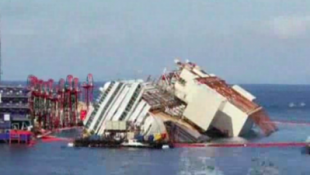
    For the first time since the cruise ship slammed into rocks off the coast of Isola del Giglio, Italy, a disaster that claimed 32 lives, the captain of the Costa Concordia, Francesco Schettino, climbed aboard the vessel yesterday with a team of experts. The experts where appointed by the court to determine if the Costa Concordia wreck was caused by anything other than human error, and Schettino accompanied them at the request of his attorneys.

    Schettino is currently on trial in Italy and is facing multiple charges, including manslaughter and abandoning ship. It is of course an open question to be determined by the court whether Schettino is responsible for shipwreck, but certain facts seem to work against his defense. His decision to steer the ship off its automatic course to salute the inhabitants of Isola del Giglio obviously precipitated the disaster, and it is indisputable that he abandoned the ship before every passenger was off, as a transcript of the emergency call between the Italian coast guard and Schettino that took place right after the wreck shows.

    On the other hand, a captain is not exclusively responsible for the physical movements of a cruise ship – moving a large vessel depends on multiple people – and it is still unclear what the crisis center staff told Schettino as the ship was sinking. No one died when the vessel hit the rocks, so the 32 deaths technically resulted from a failed evacuation, and this could shift some of the blame to the first responders. There are also questions about the failings of the ship itself – Schettino has noted that the vessel’s watertight doors malfunctioned, letting more water into the ship – and of course this is exactly why the team of experts recently surveyed the wrecked Costa Concordia.

    The captain was able to board the ship thanks to a parbuckling operation that took place a few months ago. By harnessing leverage, the massive sunken ship was raised, or rotated to an upright position. Currently, it sits atop underwater platforms right outside Giglio’s port.

  • Whether Francesco Schettino, Disgraced Captain of the Costa Concordia, is Responsible for the Shipwreck

    Francesco Schettino, the captain of the Costa Concodia that crashed off Isola del Giglio, Italy in January 2012, attended a hearing in Italian court yesterday in connection to his role in the disaster. The hearing likely marks the beginning of a high-profile (and potentially lengthy) court saga that will have Francesco Schettino at its center, as the Costa Concordia captain is expected to be charged with causing the shipwreck, abandoning ship, and numerous counts of manslaughter. Eight others, including three people who worked for Costa Crociere’s crisis center, are also facing possible charges.

    As we have explained in previous articles about the Costa Concordia disaster, the captain has received the overwhelming share of blame for the disaster. To salute the inhabitants of Isola del Giglio, Italy, he manually guided the vessel, thereby turning off the automatic steering. Sailing close to the island, the ship struck a reef, which is what precipitated the wreck. These are the events that happened, so it seems reasonably clear that the captain is at least partially responsible for the disaster. (Schettino himself has publicly apologized for the accident and has accepted at least some degree of responsibility.) However, it is worth noting, as Schettino’s attorneys surely will, that the captain of a vessel is not responsible for all the physical movements of a ship, and maneuvering a large cruise ship requires several different people all doing their proper part.

    Schettino has also been widely condemned as a coward for leaving the ship when hundreds of desperate passengers remained on board (hence the possible “abandoning ship” charge). Hostility for Schettino perhaps reached its acme when the Italian media released a transcript of the captain’s frantic conversation with the Italian Coast Guard. The transcript doesn’t portray Schettino in a good light, as it records the captain almost pleading with the Coast Guard officer to not make him go back on board.

    All that said, it is far from clear that Schettino alone caused the numerous deaths that resulted from the wreck. Indeed, he has claimed that his actions immediately following the collision with the reef actually saved hundreds of lives. In steering the ship closer to land, he prevented it from going down in deep waters, which may have caused far more people to drown. Nevertheless, 32 people died because of the disaster, and 32 is always a large number of casualties even when considered against the 4,252 people on board the ship.

    And the casualties are of course what make the shipwreck a tragedy. Whomever is ultimately responsible for the deaths will face the harshest judgement. No one died when the ship first hit the reef (i.e., no one died on impact), so the 32 deaths were the result of a failed evacuation. How exactly the evacuation was conducted is a complicated question, as Schettino was in contact with the crisis center when people were frantically fleeing the ship. Because of the black box on the ship, Schettino’s end of the conversation is recorded, but investigators are of course keen to know what the people in the crisis center told him. Depending on what they said, they could be held partially or even ultimately responsible for the casualties.

    The first hearing occurred only yesterday, so we are in the beginning stages of figuring out exactly what happened. How the crisis unfolded, along with who said what, will heavily influence the outcome of the trial that will almost certainly go forward.

  • Captain of Costa Concordia Attends Hearing

    The captain of the Costa Concordia, the large cruise ship that crashed in January 2012 off Isola del Giglio, Italy, causing the deaths of 32 people, attended a hearing today about the disaster in an Italian court. Francesco Schettino is facing a slew of charges, including multiple counts of manslaughter. He is also charged with abandoning ship while passengers were still on board and causing a disaster. If Schettino is successfully convicted of these charges, he could face over 2,500 years in prison.

    Schettino has been widely condemned since the disaster occurred. Many have claimed that in an act of reckless showmanship, the captain tried to sail by the small island of Giglio to salute the people on land. Clearly, he failed, and instead ran the ship into a reef, causing it to keel over and partially sink. What’s more, the captain allegedly abandoned ship when he should have been on board helping the hundreds of passengers who remained on the vessel. (Schettino reputation wasn’t helped when the Italian media published a transcript of the captain’s conversation with the Italian Coast Guard soon after the ship struck the reef.)

    Schettino has publicly apologized for the accident and has even accepted some of the responsibility for the disaster, but he insists that his actions saved hundreds of lives. Had he not managed to steer the ship closer to the shore, he claims, it might have went down in deeper waters, causing many more passengers to drown.

    As more details from the trial emerge, we’ll be sure to keep our readers posted, so come back often for more coverage of the court proceedings. For a little background on the disaster, check out our article on cruise ship safety in light of the Costa Concordia disaster.

Skip to content